The 1660s was a high point in the art of enamel work! Many amazing objects from lavish gem set caskets to small watches like this were made.
This particular example was made in London in the mid 1660s. It’s quite possible it was made in Cheapside in the city of London as this was the hart of goldsmithing in the 17th century. Quite tantalising to think this watch was made only a year or so before the great fire of London, which would go on to destroy not only Cheapside but the whole city.
In fact many of the objects discovered in the famous Cheapside horde use very similar techniques.
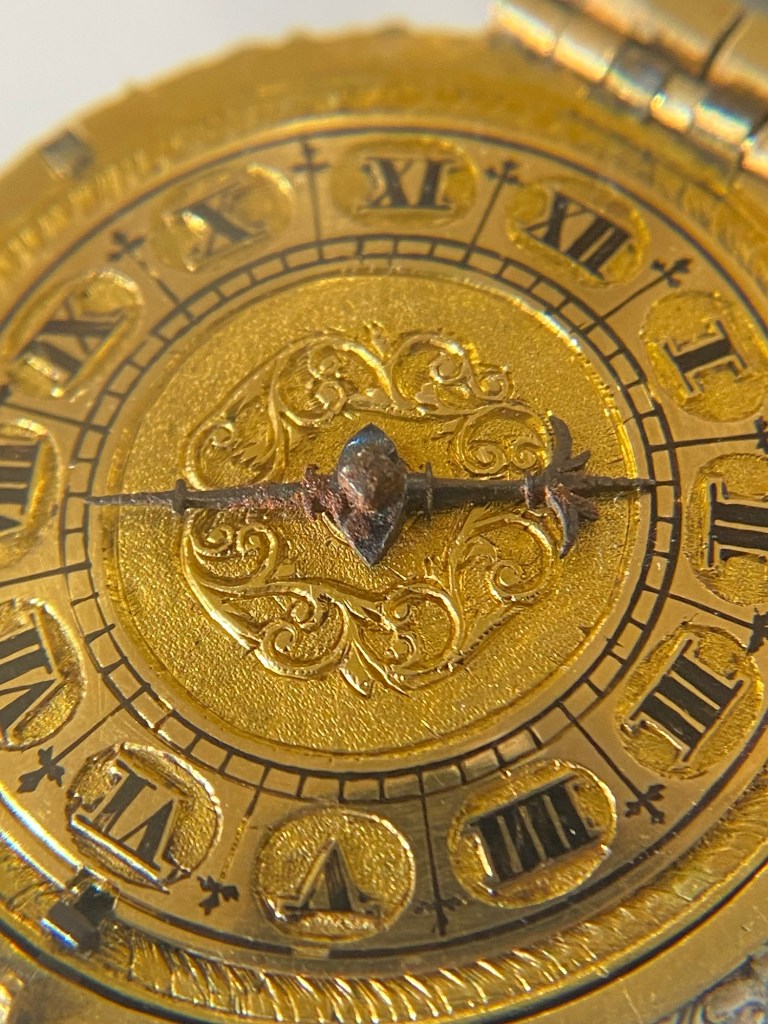
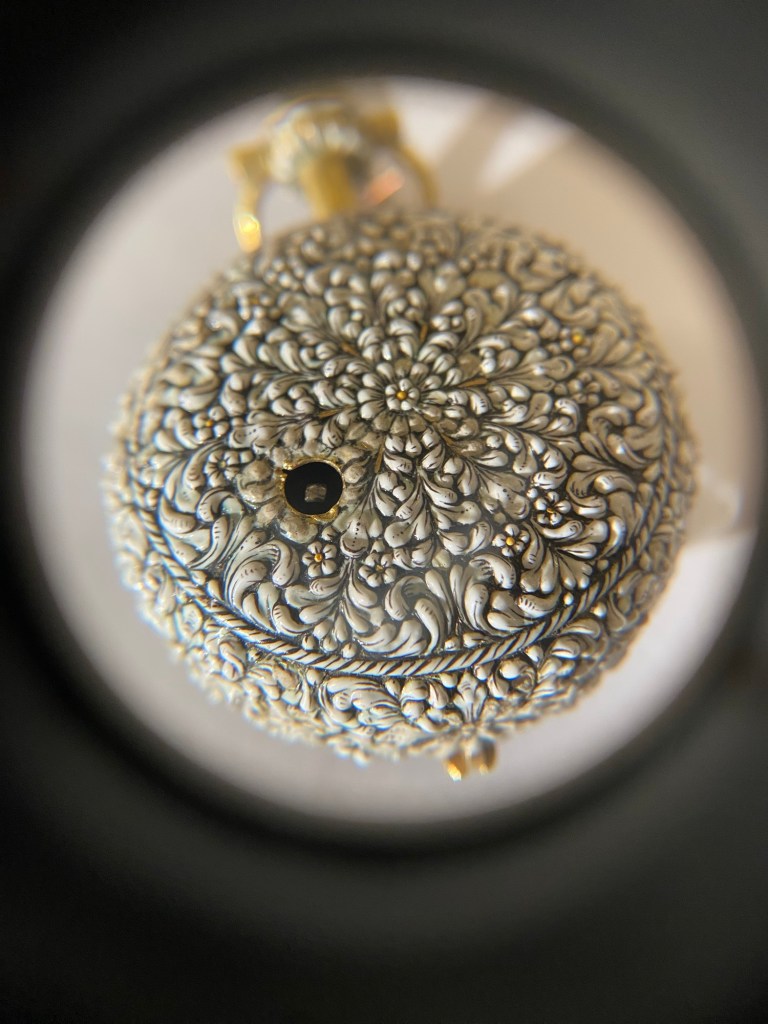
The watch case itself is made of gold and the surface has been lavishly decorated with this dense white enamel work.
This technique of enamelling was also used on the settings of St Edward’s crown in the Crown Jewels which was made at the same time as this watch.
The dial of the watch is also made of solid gold and is what we call a champlevé dial. The word champlevé literally means ‘raised fields’ and in this case instead of enamel that fills the gaps black wax does.
The sort of person who would have owned a watch like this would have almost certainly been someone of extreme wealth and quite possibly a member of the royal court.
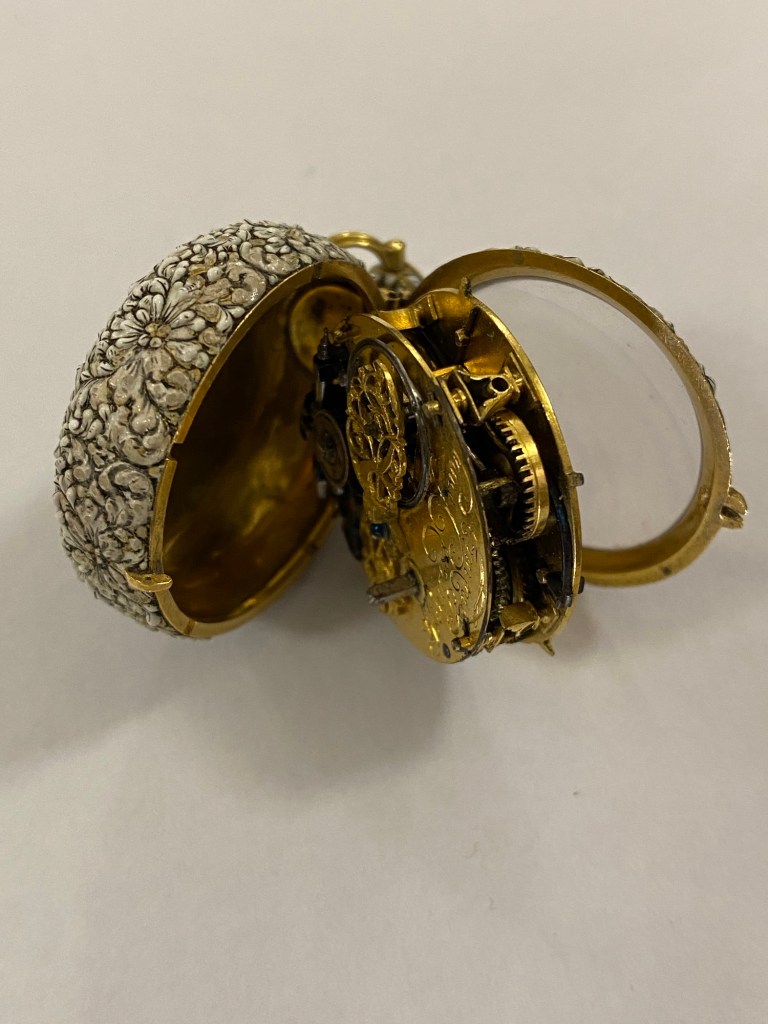
The movement of this watch is a lovely example of watchmaking of the period and has an early flourish of tulip form pillars which would go on to be used in watches right up to the end of the 17th century to fit in with the fashionable “tulip mania”.
The watch was made by Henry Young who was recorded to be working from 1659.
You can view this watch in the Ashmolean museum in Oxford which has one of the finest collections of early watches in the UK.
 Lewis Walduck
Leave a comment