Most watches made in the 16th and 17th centuries were terrible timekeepers. So, in the centuries after many of them were “upgraded” to keep better time. Although it’s something we frown upon today, quite often these watches wouldn’t have survived if work like this was not done, as they still were working objects.
This watch below is the oldest example here, and in the 18th century it has had a new balance wheel with a hair spring added, to keep better time. As upgrades go this one is quite nice, as they have kept the original balance cock which is a lovely early example that is pinned rather than screwed on.
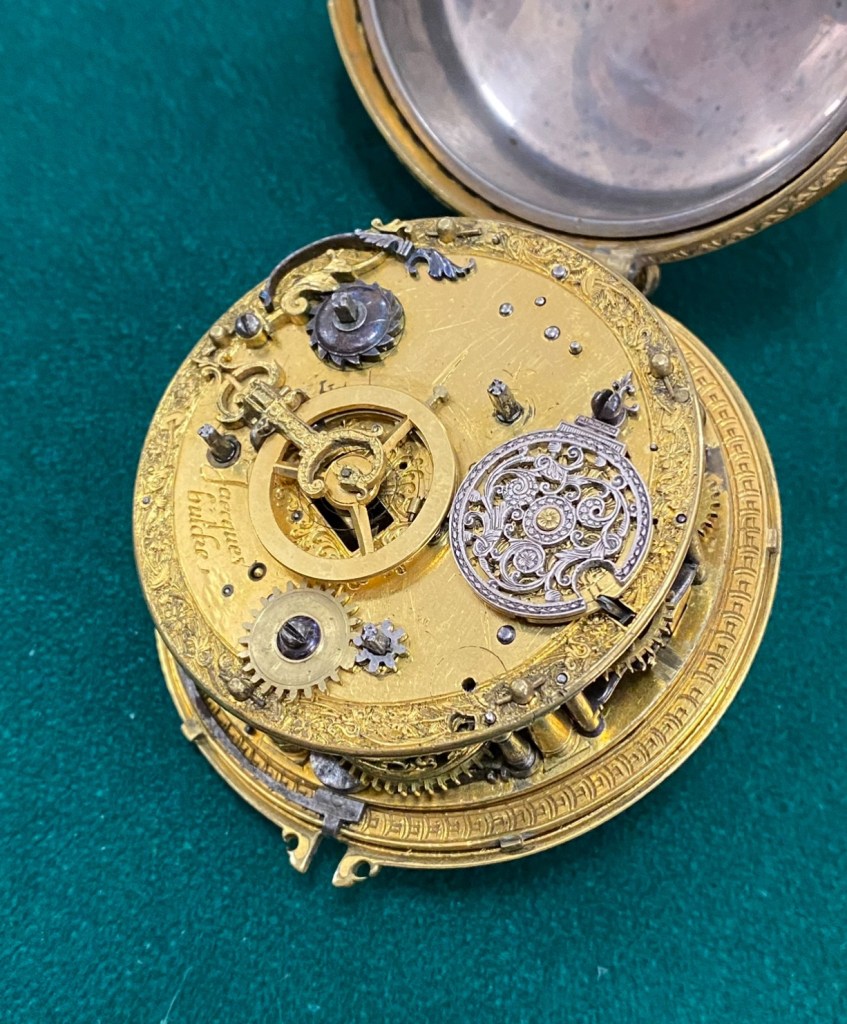

The example below has not fared so well when the term “original condition” is used! It was made probably in the 1630s by one of the founding members of the clockmakers company. However in about 1780 most of the original fabric on the movement has been removed and all of this typically engraved 18th century work has been added. Though I must say it’s been done very well and note how the balance cock is made to fit the edge of the floral border. This is essentially a new watch housed in antique plates.
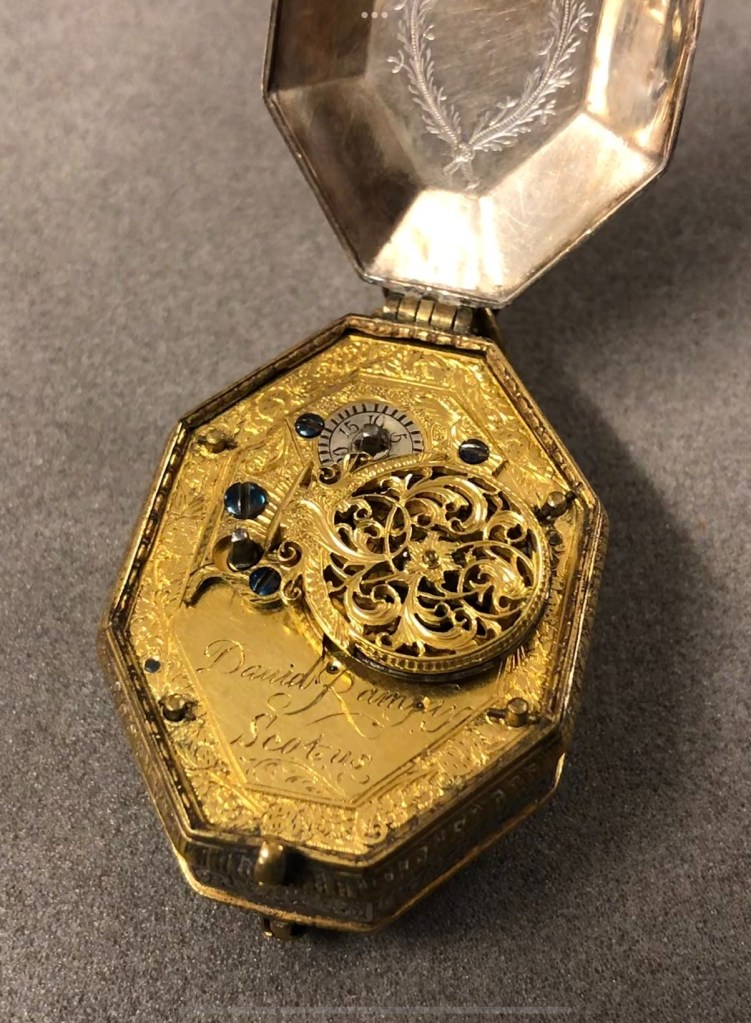
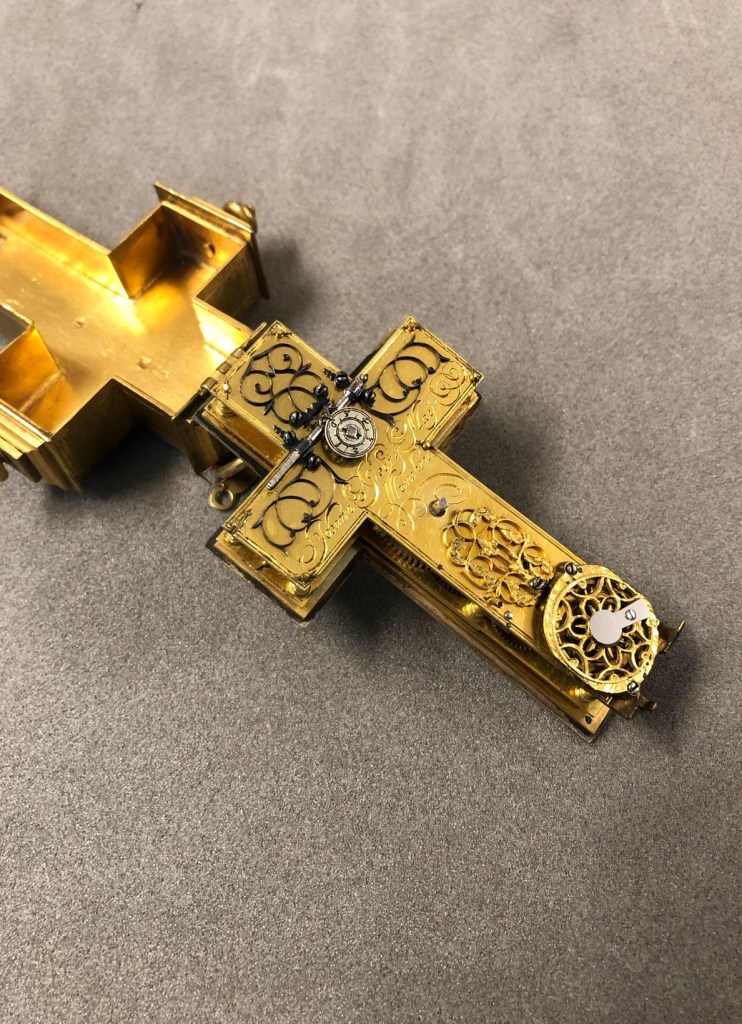
This cruciform watch was made in the 1660s and is almost completely in original crisp condition, until you look at the bottom of the cross.
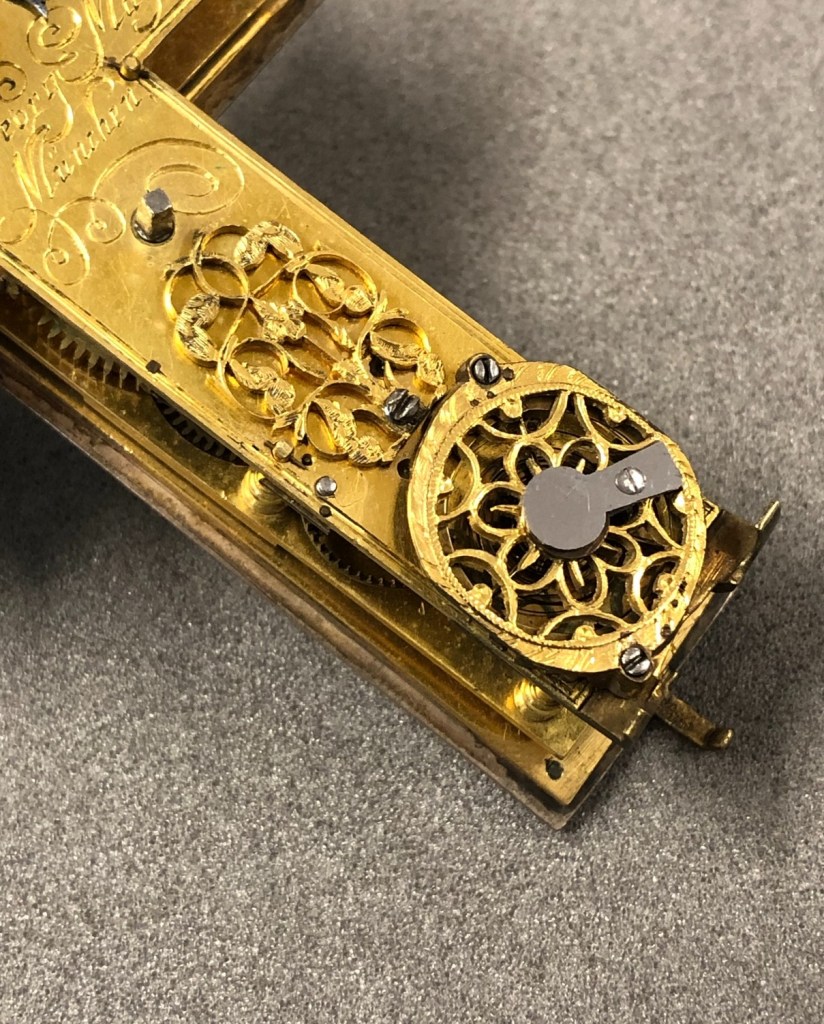
In the early 19th century, this continental balance bridge, wheel, and Hair spring has been added to keep better time. One thing I like, though is how they’ve kept the foot of the original balance cock in its original place.
Finally, this watch was made in about 1680 and it’s a great example to show that sometimes even the original movements were just completely replaced. In the 1780s a watchmaker has made a completely custom movement in an oval form to fit this case. It’s beautifully made, and it shows that even in the 18th century these watches were still treasured.

Most of the watches illustrated, here are from the Ashmolean museum and private collections.
 Lewis Walduck
Leave a comment